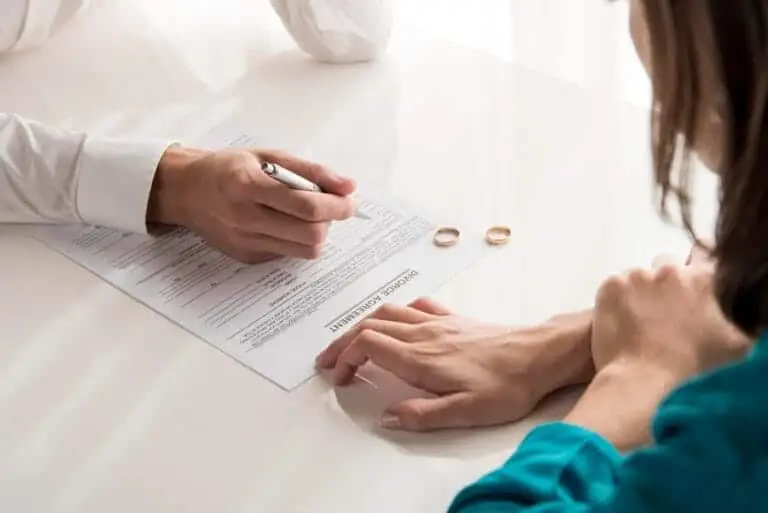
Yes, you can divorce a spouse with dementia or a serious mental illness in the Netherlands. The court grants a divorce at the request of one spouse if the marriage has broken down irretrievably (duurzaam ontwricht) (Articles 1:150 and 1:151 of the Dutch Civil Code, BW); the other spouse does not have to agree, or be able to agree.
What changes is who acts for the ill spouse and how closely the court checks the financial outcome. If your spouse can no longer look after their own interests, the subdistrict court (kantonrechter) usually appoints a representative first, and the divorce is then conducted with that representative. See also our page on rozwód w Holandii.
Spis treści
Is a diagnosis of dementia the same as legal incapacity?
No. Dutch law looks at decision-making capacity (wilsbekwaamheid): can the person understand what a divorce means for their housing, income and care, weigh those consequences and express a consistent choice? That is assessed per decision and per moment.
Many people with a psychiatric condition or early-stage dementia can still instruct their own lawyer. Where there is real doubt, the court will not rely on the word of the spouse who wants the divorce. It will want an independent medical opinion, for example from a geriatrician or psychiatrist, and will try to hear the person themselves.

Which protective measures exist?
Book 1 BW offers three measures, all ordered by the subdistrict court. The court chooses the least far-reaching measure that is sufficient.
| Zmierzyć | Zakres | Rola w rozwodzie |
|---|---|---|
| Administration (bewind, Article 1:431 BW) | Assets, income and debts; the person keeps legal capacity | The administrator (bewindvoerder) deals with the division of property, pension and maintenance |
| Mentorship (mentorschap, Article 1:450 BW) | Opieka, leczenie i pielęgnacja | The mentor clarifies what future care requires |
| Curatorship (curatele, Article 1:378 BW) | Zarówno sprawy majątkowe, jak i osobiste | The person cannot perform legal acts on their own (Article 1:381(2) BW); the curator represents them |
Curatorship is only possible if a less far-reaching measure is not sufficient (Article 1:378(1) BW). Administration and mentorship are often combined, which gives similar coverage without the loss of legal capacity. Our article on ograniczona zdolność prawna explains the general effects.
Who can apply, and who is appointed?
The person concerned, their spouse or partner, relatives up to the fourth degree, and in some cases the care institution or the public prosecutor can apply (Article 1:379 BW for curatorship). The application goes to the subdistrict court of the place where the person lives.
The court follows the person’s own expressed preference for a representative, unless there are good reasons not to (Article 1:383(2) BW); otherwise it prefers the spouse or a close relative. In a divorce, however, the spouse who wants the divorce has a clear conflict of interest, and the court will normally appoint someone else or a professional. A spouse who already acts as administrator or curator can ask the court to be replaced, or the court can do so. A lasting power of attorney (levenstestament) made while the spouse still had capacity helps, but does not always prevent the need for a court measure.
How does the divorce procedure work?
A lawyer files the divorce petition with the district court; a divorce request can only be filed by a lawyer. The petition usually includes the ancillary claims: division of the property, spousal and child maintenance, pension and the use of the family home.
The difference lies in who responds. With curatorship, a spouse who can still form their own will about the divorce conducts the defence personally; the curator cannot take that decision over, but the curator’s consent is needed for a pension defence (Article 1:153 BW). With administration, the administrator deals with the property claims and the spouse remains a party for personal matters. The court looks more closely than usual at the divorce settlement (echtscheidingsconvenant): it will want valuations, pension statements, the income of the paying spouse and evidence of care costs. The marriage ends when the divorce decision is registered in the civil registry; that request must be made within six months after the decision becomes final, or the decision lapses (Article 1:163 BW).

How are the property and pension divided?
That depends on the matrimonial property regime. Couples who married on or after 1 January 2018 without a prenuptial agreement have a limited community of property (Article 1:94 BW): property from before the marriage, gifts and inheritances stay outside it. Couples who married earlier without a prenuptial agreement usually have a general community of property in which everything is shared.
Old-age pension built up during the marriage is shared under the Pension Rights Equalisation Act (Wet verevening pensioenrechten bij scheiding, WVPS): by default, each spouse is entitled to half of what the other built up during the marriage. If you notify the pension fund in time using the official form, the fund pays the share directly, which gives a spouse in care a predictable income. Where one spouse is ill, the real questions are usually liquidity and timing: must the house be sold, can the healthy spouse buy out the other, and how quickly is money needed for care?
Jak długo trwa obowiązek alimentacyjny wobec małżonka?
Spousal maintenance (partneralimentatie) depends on the need of one spouse and the ability of the other to pay. If the court sets no term, it ends after half the length of the marriage, with a maximum of five years (Article 1:157(1) BW).
- Marriage of more than fifteen years and the recipient is at most ten years below state pension (AOW) age when the divorce is filed: until that age (Article 1:157(2) BW).
- Marriage of more than fifteen years and the recipient born on or before 1 January 1970: ten years (Article 1:157(3) BW).
- Children of the marriage under twelve: at least until the youngest turns twelve (Article 1:157(4) BW).
- If ending the maintenance would be unacceptable, the court can set a new term on request filed within three months after the maintenance ended (Article 1:157(7) BW). This is the provision most relevant to a spouse who will never be able to support themselves.
Maintenance is indexed by law each year on 1 January (Article 1:402a BW). If the ill spouse lives in a care home funded under the Long-Term Care Act (Wet langdurige zorg, Wlz), they pay an income-dependent personal contribution set by the CAK; the court works with the actual net costs after that contribution. See our przewodnik po alimentach w Holandii.

How do you protect what the ill spouse receives?
Through administration (bewind). Dutch law does not have the trust, but an administrator manages the money under the supervision of the subdistrict court and must account for it periodically.
If no measure is in place yet, it is often sensible to apply for one before the settlement is carried out. Payments can then go to an account under administration, and a notary can hold the proceeds of a house sale until completion. Relatives who want to provide for the same person by will can attach a testamentary administration to their inheritance.
What if the ill spouse wants the divorce?
A protective measure does not silence the person concerned. Under administration or mentorship, the spouse keeps legal capacity and can instruct a lawyer and file the petition; the administrator handles the property side.
Under curatorship, divorce is an exception to the rule that the person cannot act alone. Only the spouse personally can file for divorce, without the curator’s consent, provided they can still form their own will about it and understand what it means; the curator cannot file on their behalf, and if the spouse can no longer form that will, the request is inadmissible (Supreme Court, ECLI:NL:HR:2023:949 and ECLI:NL:HR:1980:AC6859). The other spouse can still file. The reverse also happens: if relatives see a vulnerable person being pushed into a bad settlement, they can ask the subdistrict court for a measure or for replacement of a representative who is not acting independently.

What happens to the children?
Parents who had joint parental authority (gezag) during the marriage keep it after the divorce (Article 1:251(2) BW). The court only grants sole authority in limited cases, and illness matters only in so far as it affects decisions about the child.
A parenting plan (ouderschapsplan) is mandatory for parents with minor children. It sets out who takes day-to-day decisions if the ill parent cannot, and how contact works around hospital admissions or a move into care. See our overview of prawo dotyczące opieki nad dzieckiem w Holandii.
A co jeśli masz rodzinę międzynarodową?
Jurisdiction for divorce and parental responsibility follows the Brussels II-ter Regulation, mainly based on habitual residence, so spouses living in the Netherlands can usually divorce here whatever their nationality. The applicable law follows the Rome III Regulation, and maintenance has its own EU rules.
A protective measure ordered abroad does not automatically give the representative authority in the Netherlands. The Hague Convention on the International Protection of Adults provides for recognition between contracting states; otherwise a Dutch measure usually has to be requested. Check this early, because it can delay the settlement.
Co powinien sprawdzić małżonek, który chce rozwodu?
- Do you have an independent medical opinion on your spouse’s capacity?
- Is a protective measure in place, and are you or a closely aligned child the representative?
- Have you mapped current and expected care costs, including the Wlz personal contribution?
- Do you know the matrimonial property regime and the pension rights built up?
- Have you planned how your spouse will be housed and financed after the divorce?
What should you check as a representative or family member?
- Is the representative independent of the spouse who wants the divorce?
- Does the settlement rest on documents: valuations, pension statements and income data?
- Does the maintenance cover the actual care costs after the personal contribution?
- Is the money the ill spouse receives placed under administration?
- Has the ill spouse been heard, and are their wishes recorded?
What can we do for you in a divorce involving dementia or mental illness?
Nasza prawnicy rodzinni act for spouses, representatives and relatives.
- We file or contest an application for administration, mentorship or curatorship.
- We conduct the divorce with the curator or administrator on the other side.
- We calculate spousal maintenance based on actual care costs and the statutory term.
- We prepare the division of property and the pension equalisation.
- We advise on recognition of foreign protective measures.
Podsumowanie
- One spouse can obtain a divorce on irretrievable breakdown; the ill spouse’s consent is not needed (Articles 1:150 and 1:151 BW).
- Capacity is a legal question per decision; a diagnosis alone does not settle it.
- Administration, mentorship and curatorship are ordered by the subdistrict court; a spouse seeking divorce will normally not act as representative.
- Spousal maintenance has a statutory term, which the court can extend if ending it would be unacceptable (Article 1:157 BW).
- Money the ill spouse receives is best protected through administration under court supervision.
PYTANIA I ODPOWIEDZI
Can my spouse with dementia block the divorce?
No. The court grants the divorce at the request of one spouse if the marriage has broken down irretrievably (Article 1:151 BW). The ill spouse, or their representative, can however defend their interests in the financial settlement.
Can a curator refuse the divorce?
A curator cannot block a divorce based on irretrievable breakdown, but will scrutinise the settlement. If no agreement is reached on the financial arrangements, the court decides.
Can I stay my spouse’s administrator during the divorce?
Usually not. As the spouse seeking the divorce you have a conflict of interest, so the subdistrict court will normally appoint another administrator or a professional for the duration of the proceedings.
How is spousal maintenance set if my spouse lives in a care home?
The court looks at the actual costs, including the income-dependent personal contribution under the Long-Term Care Act (Wlz) set by the CAK, and at your ability to pay. The statutory term applies, but the court can extend it if ending the maintenance would be unacceptable (Article 1:157(7) BW).